Quantum computers will crack your encryption. Now what?

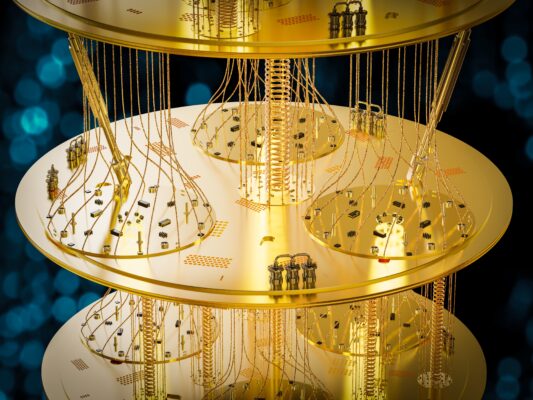
Your company relies on encryption to keep its critical business communications and data safe. And although they’re likely secure now, they won’t be in the future. According to RAND, experts expect quantum computers capable of breaking today’s encryption standards to arrive by the 2030s.
Although this technological breakthrough hasn’t happened yet, it poses an urgent national security threat. No doubt, the Pentagon is working on it right now. With all the macro-level implications that this aspect of quantum computing heralds, you might initially think the whole thing is above your pay grade and someone else’s problem. But it’s going to affect your company, too.
Once sufficiently powerful quantum computers are viable, a Pandora’s box will pop open. Anyone who gains access to data that’s been encrypted using current algorithms will be able to read it. You will not be able to protect customer data, VPN traffic, or even encrypted backups designated for disaster recovery. I don’t have to tell you this is an IT pro’s worst nightmare.
Fortunately, there are steps you can take to ward off this disaster. NIST released its first post-quantum encryption standards in August 2024, providing protective algorithms for immediate deployment. Yes, this means you’ve got another migration project on your plate, but getting a head start will make all the difference later. Here’s what you need to know about the coming quantum encryption challenge and how to get out in front of it.
The bad news: quantum computers will break today’s encryption
Traditional encryption relies on math problems that would take classical computers centuries to solve. RSA encryption, which protects much of today’s internet traffic, works because factoring massive numbers is impossibly hard for regular computers. But tomorrow’s computers will make quick work of it. According to the MIT Technology Review, researchers have shown that a quantum computer with 20 million noisy qubits could crack RSA-2048 in just 8 hours.
If this seems like it’s going to be a slog, know that you’re not alone. Most organizations struggle to find all their sensitive data.
It’s hard to believe these kinds of advanced quantum computers might exist soon, but the SANS Institute describes them as an imminent threat. IBM, Google, and others already have quantum computers humming away in their labs. They’re not powerful enough to break encryption yet, but they’re scaling up fast. The Global Risk Institute estimates that a cryptographically relevant quantum computer (CRQC) could break standard encryption protocols in under 24 hours.
The writing is on the wall for everyone to see, including bad actors. They’re already vacuuming encrypted data off networks and storing it, banking on future quantum computers to unlock it later on. Some of these criminal organizations play the long game, and they know full well that once a master key materializes, they’ll be able to monetize or weaponize what they find in the data they’ve held onto for all this time.
What does this mean for you? Any sensitive data with a long shelf life is vulnerable right now. If you’re storing patient records with 30-year retention requirements or if you’re holding onto financial data your auditors need for the next decade, for example, they’re going to be at risk once the necessary quantum computers are ready for prime time. The same thing goes for any intellectual property you wouldn’t want competitors to see.
The good news: post-quantum cryptography (PQC) is here
Although it would of course be the ultimate nerd dream to have a quantum computer, you don’t actually need one to protect your most important data from this threat. Post-quantum cryptography (PQC) uses different math problems that even quantum computers struggle to solve, and these algorithms can run on the servers you already have.
As I mentioned earlier, NIST released three finalized standards in August 2024: FIPS 203 (ML-KEM) for general encryption like securing web traffic, FIPS 204 (ML-DSA) for digital signatures, and FIPS 205 (SLH-DSA) for hash-based signatures. These are drop-in replacements for RSA and ECC that quantum computers can’t crack.
These algorithms rely on the complex mathematics of polynomial lattices and hash functions. Although they require larger key sizes and more processing power than current methods, the performance hit is manageable on modern hardware. We’re talking milliseconds, not minutes.
NIST has also added HQC as a backup algorithm using different mathematics. Why would a backup be needed, you might ask? Because putting all your eggs in one cryptographic basket is exactly how we got into this mess. If someone discovers a weakness in the primary algorithms, you’ll have alternatives ready.
Meanwhile, major vendors are already building PQC support into their products. Microsoft has PQC in preview for Windows, and cloud providers are updating their services. The infrastructure is coming together, which means you can start planning your migration now.
Building your quantum readiness assessment
Before you can protect against quantum threats, you need to know what you’re protecting. Most IT shops don’t have a comprehensive inventory of their cryptographic tools, which makes planning a migration like trying to navigate without a map.
Start with the basics. Where is encryption happening in your infrastructure? You’re looking for everything from VPN concentrators and web servers to that ancient database server nobody wants to touch. Don’t forget about certificates, SSH keys, and the encrypted connections between your applications. This inventory is going to require some elbow grease, but it beats discovering critical systems after quantum computers go mainstream.
Once you know what you’ve got, tackle systems with long-lived sensitive data before worrying about the rest. Systems storing data that needs to be kept confidential for many years, like health records and financial data, should probably go at the top of your list. That dev server with last year’s test data can probably wait until later, though.
There are tools available that can help with discovery, from network scanners to certificate management platforms. You may still need to get creative or do a little legwork. Some of your cryptography is likely buried in legacy applications, third-party libraries, and hardware appliances. You might need to dust off documentation, ask detailed questions of vendors, and trace your network traffic to find it all.
If this seems like it’s going to be a slog, know that you’re not alone. Most organizations struggle to find all their sensitive data. Start with what you can see, document everything in a spreadsheet if that’s the path of least resistance, and build from there. Perfect is the enemy of the good.
Creating your strategic PQC migration roadmap
So how much time do you have to work with? For benchmarks, consider the UK’s National Cyber Security Centre’s PQC milestones: complete discovery by 2028, finish high-priority migrations by 2031, and achieve full transition by 2035. These milestones might look leisurely, but remember that past crypto migrations took over a decade, and this one touches everything.
Start with a few simple steps. First, appoint someone to own this project. Second, begin your inventory—even an incomplete or partial one is something to go on. Third, engage your vendors about their PQC roadmaps. If they stall or offer vague answers, that tells you something important.
For phasing, think in terms of risk and feasibility. Pilot PQC with new systems in which you’re not risking production, and test PQC with internal tools before customer-facing ones, for example. Expect to run hybrid implementations (classical plus quantum-resistant) during the transition, since you’ll need backward compatibility for years.
Most importantly, budget for this now. It’s not a one-time upgrade. You’ll need new certificates, updated appliances, and probably some consultant hours. The longer you wait, the more you’ll pay in rush charges when quantum computers suddenly become everyone’s problem.
The clock is ticking on your encrypted data
The post-quantum encryption era is looming. While the Pentagon worries about nation-state threats, you need to worry about the sensitive data sitting in your environment today. By taking a proactive stance starting now, you’ll be prepared when Q-Day—the moment quantum computers finally break standard cryptography—arrives.