How to manage an IT budget amid uncertain tariff policy

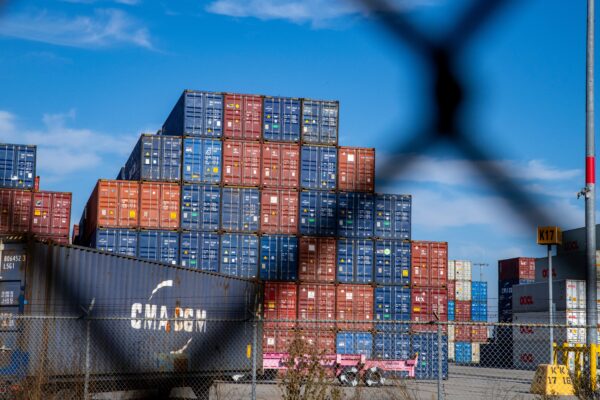
Tariff policy changes are the IT equivalent of a pop quiz—unpredictable, stressful, and guaranteed to throw off even the best-laid plans. For IT leaders, finance teams, and procurement pros, managing an IT budget in 2025 means staying agile, informed, and ready to pivot as global trade winds shift. Here’s a practical playbook for keeping your IT budget on track, even when tariffs are rewriting the rules.
The tariff challenge: What’s at stake?
Tariffs—government-imposed taxes on imported goods—can jack up the price of essential IT gear overnight. From servers to laptops and semiconductors, many core IT components are now subject to tariffs that can add 20% or more to procurement costs. These increases ripple through the entire IT stack, affecting hardware, software, cloud subscriptions, and support services as vendors pass on their increased costs.
As IDC recently reported, “The wave of new tariffs introduced by the US administration will drive up technology prices, disrupt supply chains, and weaken global IT spending in 2025. Not only will these tariffs have a direct inflationary effect on technology prices in the US, but growing concerns about a broader economic slowdown will lead to weaker investment by businesses and consumers around the world… IDC published a downside scenario in which global IT spending would grow by 5%, rather than the 10% growth we currently project in our baseline forecast. … Our new baseline forecast in April will reflect what we now know, which is that these new tariffs will have a significant negative impact on the ICT industry in 2025.”
Device quotes, once valid for weeks, now sometimes expire in hours, making traditional procurement cycles feel like a relic. Managing around tariffs and keeping costs down will require thinking carefully through the following steps to ensure you stay on budget and stay on top of your company’s technology needs.
Step 1: Audit and understand your IT spend
Start with a clear-eyed audit of your current IT expenditures:
- Categorize by type: Hardware, software, services, support, cloud, personnel.
- Identify import-reliant items: Pinpoint which parts of your stack depend on foreign-sourced components or vendors exposed to tariffs.
- Assess exposure: Quantify how much tariffs are inflating costs in each category.
This baseline helps you see where your vulnerabilities lie—and where you have room to maneuver if tariffs spike again. Gartner recommends this as a first step in any risk-based IT budget process.
Step 2: Build flexibility into your budget
Rigid, annual IT budgets are a relic of calmer times. In today’s tariff-driven world, agility is key:
- Quarterly reviews: Schedule regular budget check-ins to assess performance and reallocate funds as needed.
- Contingency funds: Set aside a buffer for unexpected tariff-driven cost increases or supply chain hiccups.
- Scenario planning: Prepare for multiple tariff scenarios—best case, worst case, and most likely—to enable rapid pivots.
Step 3: Engage stakeholders and align with business goals
Tariff-driven uncertainty isn’t just an IT problem—it’s an organizational challenge. Bring key players to the table:
- Involve finance, procurement, and business unit leaders: Their insights ensure your budget reflects broader business priorities and risk tolerance.
- Transparent communication: Regularly report on budget performance and tariff impacts to maintain trust and buy-in.
- Align IT investments with business strategy: Prioritize projects that directly support your company’s core objectives, maximizing ROI even as costs fluctuate.
Step 4: Optimize procurement and sourcing strategies
With device prices possibly jumping by $200 or more per unit and quotes expiring quickly, procurement needs a refresh:
- Accelerate purchases: If you know tariffs are coming, consider buying ahead to lock in lower prices.
- Diversify suppliers: Don’t rely on a single vendor or country—seek alternatives to spread risk and potentially avoid the highest tariffs.
- Negotiate contracts: Leverage your understanding of how tariffs affect vendor pricing to secure better deals or flexible terms.
- Monitor supply chain: Stay alert for disruptions that could delay projects or inflate costs, and have backup plans in place.
Step 5: Prioritize and cut strategically
When tariffs squeeze your budget, not all projects can survive:
- Rank IT initiatives: Focus on those with the highest strategic value or ROI.
- Defer or scale back less critical projects: Postpone non-essential upgrades or expansions until costs stabilize.
- Optimize existing assets: Extend hardware lifecycles, consolidate redundant systems, and eliminate unused licenses to free up funds.
- Cost optimization over cuts: Look for efficiency gains before slashing headcount or essential services.
Info-Tech Research Group recommends creating an IT Cost Optimization Road Map, considering external factors such as capability, market and macro forces.
Step 6: Leverage technology for budget management
Modern financial tools can help you stay ahead of the curve:
- Expense tracking: Real-time monitoring of IT spend helps spot overruns and areas for savings quickly.
- What-if analysis: Use scenario modeling to test the impact of different tariff or procurement strategies before making decisions.
- Benchmarking: Compare your spending against industry peers to identify potential efficiencies.
Step 7: Stay informed and proactive
Tariff policy is a moving target. Keep your finger on the pulse:
- Monitor policy changes: Subscribe to trade and industry updates so you’re not caught off guard by new tariffs or retaliatory measures.
- Engage with vendors: Ask how they plan to handle tariff impacts and whether they expect further price increases.
- Review and adapt: Make your IT budget a living document—update it as conditions change, not just once a year.
Case in point: The real-world impact
Suppose your organization planned a 500-laptop refresh in 2025. Last year, this cost $500,000. With a 45% stacked tariff, that same order now runs $725,000—a $225,000 surprise that can blow up your budget. Multiply this across servers, networking gear, and cloud infrastructure, and the stakes become clear.
Conclusion: Turning chaos Into opportunity
Managing an IT budget in the era of shifting tariffs is part art, part science, and part high-wire act. But by auditing your spend, building flexibility, aligning with business goals, optimizing procurement, prioritizing ruthlessly, leveraging technology, and staying informed, you can turn volatility into a competitive advantage.
As Info-Tech Research Group’s Dave Kish puts it: “A flexible funding model is not just about identifying new sources of funding to pay for IT capabilities and initiatives, but challenging the status-quo within your organization as to how funds are actually used to drive business agility, velocity, and value.”
In short: Don’t let tariffs dictate your IT destiny. With the right strategies, you can weather any policy storm—and maybe even come out ahead.