Dell: Your AI strategy will fail without IT as a strategic partner

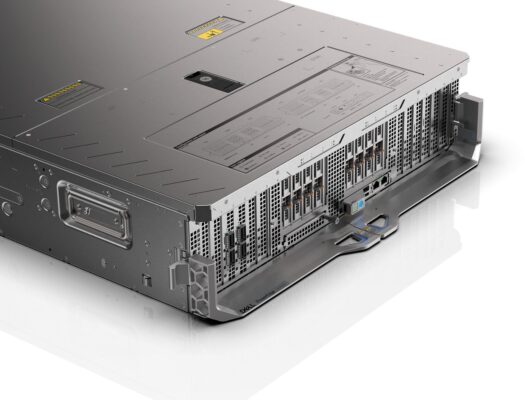
Among the highlights at this year’s Dell Technology World conference, Dell spent a lot of time talking up its newly refreshed Dell AI Factory suite of enterprise hardware products. Encompassing laptops, desktops, switches, servers, storage, power management, and software to manage it all, the AI Factor promises a turnkey, but also customizable solution for companies looking to scale their AI capabilities.
Refreshing your computing and networking loadout is never a simple undertaking, but layering-on the expectations that come with such a potentially transformational technology like AI underscores the necessity of treating your IT team as a strategic partner, regardless of the size of your business. Dell Senior Vice President of Product Marketing, Varun Chhabra, sat down with me to discuss how IT departments play a crucial role not only in deployment, but also in the strategic decision-making process for any company that wants to embrace AI.
Dell’s AI Factory is for everyone
Rich: Is it fair to say that the customer you envision for the AI factory spans the entire enterprise market?
Varun: Absolutely. It’s large, and it’s not just what we would call enterprise SMB customers. A lot of the initial adoption was cloud service providers (CSPs), or GPU-as-a-service companies coming in and providing GPU clouds. There’s also large model trainers. There’s a lot of compute required for model trainers. And then increasingly, sovereign AI. So I would say the CSPs and the model trainers are one segment. Sovereign AI efforts are another.
We think enterprise will end up being the largest of all of these segments, just because of how much need there will be for different use cases within enterprises. We think that [the AI Factory will apply to] the enterprise space all the way from the smallest company all the way to large, sophisticated organizations like JP Morgan and everywhere in between, are going to have their own versions of AI factories.
Rolling out an AI strategy demands collaboration with IT
Rich: Thinking about it from the perspective of someone working in IT, what are the things that IT people need to learn to deploy AI infrastructure? Say I’m an IT person at a medium-sized company, and I get tasked with setting up an AI Factory. I assume it’s more than just installing the basic server and client infrastructure.
Varun: I’ll give you a two-part answer. One is the technology answer, and the other one is a people answer. We’ll start with the people answer, because I think it is a more profound learning for us at Dell.
Whenever I talk to customers, the first thing I tell them is, yes, it’s very easy to fixate on the products and the great new servers and the new PCs and new storage, et cetera, et cetera, but it’s very important first to look at ITs role as being at the center of the AI innovation for the company. What ends up happening in most enterprises is there is a lot of energy around AI. Everybody’s used ChatGPT, everybody’s used Google Gemini, and everybody has ideas about how AI can help with their role, their function.
In a company of any size, all of a sudden these ideas from different lines of businesses saying that, hey, we should use AI for this. We should use AI for manufacturing. We should use AI for our storefront. We should use AI for helping our associates. We should use AI for helping our knowledge workers, engineers, etc, etc. And what, what we found is that IT is uniquely suited to be the clearing house for these use cases.
And it’s not just about approval and governance. It’s also about actually playing a strategic role. IT is uniquely placed to actually have an end-to-end view of what all these use cases are, because, let’s face it, most of these use cases cannot be enabled without IT’s help. The person in the marketing department doesn’t necessarily know what the person in the manufacturing group is doing versus or vice versa. IT has that unique point of view, so IT and the CIO office can play a very, very important role in driving the conversation with the most senior leaders in an organization.
Because what you don’t want is to do AI in a piecemeal fashion. What you really want to do is think about it end-to-end, like we’re going to deploy these five use cases to start with. How do we make sure our infrastructure can scale across all of these, and then we’ll make the right infrastructure decision. That’s what helps with all of these use cases.
Think about a data layer as a lake house versus, oh, let’s just create a data silo for the marketing AI. What that ends up doing is that it pushes you into the corner. Later on, as you try to scale, you’ll find that your data is fragmented. You’ll find that your infrastructure is fragmented. You’ll find that it doesn’t scale. And you land on the age old problem of IT, which is you end up having basically some fragmented approach to infrastructure that limits your agility, because then you try to do something else, or try to adopt a new framework, then that makes it really hard.
So that transitions into [what you were] originally asking about, which is what do IT teams need to think about from a technology perspective? There is a lot to learn. There are a lot of new frameworks. There’s new models to keep up with. So there is no substitute for an IT team to understand what that landscape is beyond just the infrastructure.
What are the different models that you want to enable? Do you want a constellation approach, for example, which means supporting a number of different models and then let the developers choose what they want to provide. Then what you’re doing as a service provider, you’re giving folks a platform that they can pick different models from.
Or do you want to say, look, we’re going to optimize on these two models, because for these use cases, this model is the best one, and for these use cases, this model is the best one. So you need to think through all of that.
You really want to think through how you align use cases. How do you think about your data strategy before you and deploy the and then, of course, once you’ve decided those things, how do you how do you get help deploying, and then potentially even managing and then skilling up all of those things
If there’s one thing you take away from this is that IT really needs to think about all aspects of that value chain. The worst thing you can do, in my opinion, is say hey, here’s a new GPU server. Let’s go deploy the latest AI platform on it. If you’ve not thought through your processes, your people, you’ve not thought through your data, and you’ve not thought about how you’re going to scale, you may solve one particular use case, but you’re you’re likely going to do something that limits your agility
IT can bring everyone together
Rich: If you have all of these different departments that want to incorporate AI, all of a sudden, if I’m in IT I have a deeper role in the ROI discussion. How do I manage that?
Varun: There’s certainly a lot of tools, and Dell has capabilities that can help customers have these conversations in an organized fashion with stakeholders. And then our partner ecosystem has that too, and there’s certainly a lot of third-party tools where you can enter some stuff in and get some information around ROI.
But what I think is most effective is for IT to actually bring that end-to-end view to the decision makers in the company, including the CIO, but then not limited just to the CIO, because what you want to do is you want to do is you want everybody aligned on what those use cases are.
Because if the CEO, CFO, CHROs, Chief Sales Officer, in addition to the CIO or the CTO, are aligned the IT person is going to be less on the back foot in terms of “defending.” It’s going to be more about, hey, we’ve already aligned on a strategy. Everybody understands that these are the two or three use cases that we’re gonna prioritize first, and then everybody understands that the other ones will come after that.
What I think IT wants to avoid is being seen as playing favorites or doing things on a first come, first serve basis where, oh, well, we already started the marketing project, because that’s who got to us.
With all these ideas coming out of the woodwork, IT can play a unique role getting all the stakeholders together and the heads of departments together and say, look, here’s what we have end-to-end. There isn’t really some cookie cutter answer to this. It really requires a lot of sitting down with people. Every company’s situation is unique. Every company’s business model is unique.
To on-prem or not on-prem
Rich: Can you speak about on-premises deployment versus going to a cloud data provider for smaller businesses?
Varun: It’s a very important question. It’s something all our customers are thinking about. I think the answer depends on where the customer’s existing data is. If you’ve got a lot of data in software-as-a-service applications, chances are that’s likely already off prem, right? So then there may be a different answer for those customers.
Depending on what their use cases are, they may decide it’s not cloud or nothing or cloud or on prem. There’s a lot of options for customers that don’t want to operate their own data centers but want to keep their AI efforts on premises. They can go to one of our many CSP or GP as a service partners who specialize in running these things at scale, so they can provide these capabilities to customers of all sizes. Depending on what the customer sees as their strategic advantage and strategic investment areas, they can decide to invest in their own data center.
And certain customers that would be a quote unquote SMB customer. They may decide it’s worth it for them to operate their own facilities. For certain customers, it makes sense to go to a GPU-as-a-service provider or a CSP. For a lot of customers, for certain workloads, it may make sense for them to just go to a software as a service application.
This goes back to my point about that there isn’t a one stop shop. Customers have to really think about what their unique value add is. This is another thing that we talk to customers about all the time. Beyond just figuring out the process and stakeholder alignment, you actually have to start your AI conversation with, what are your competitive advantages, and how is AI going to help you with your competitive advantages in your industry?
That’s a big part of the answer. For a lot of businesses, they might say, hey, the data we have on our customers and our suppliers and et cetera, et cetera, that is our unique advantage. We actually want to preserve that and keep that safe on prem. Well, that then drives other decisions down the pike.
Sign-up for the Spiceworks community to join the conversation with millions of IT pros from around the world.