President’s H-1B action puts program’s future in question

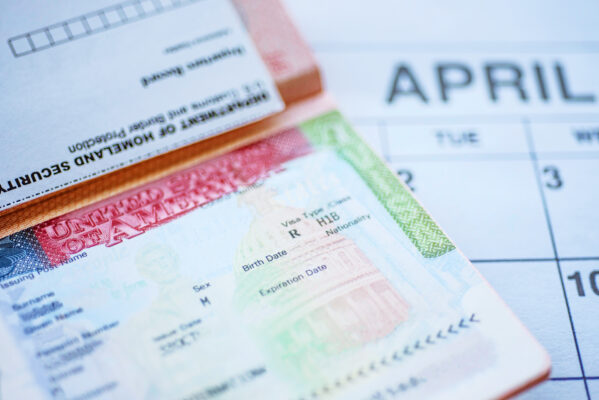
A surprise move by President Donald Trump last week has many in the tech industry wondering what the future holds for the H-1B visa program, and whether it can ultimately survive the $100,000 fee now required with new applications to the program.
On Friday, September 19, President Trump signed a proclamation requiring the payment of a $100,000 fee with each new H-1B application filed. The move is intended to encourage U.S. companies to hire more American workers. As of Sunday, employers must now provide documentation proving payment before they can file a petition on behalf of a targeted foreign worker.
The new $100,000 fee is 60 times the rate that had been previously required with H-1B applications. Fees had ranged from $2,000 to $5,000 per application depending on the size of the organization making the request. The fee only pertains to new applications, and it will be implemented with the upcoming H-1B lottery cycle.
Reaction to the president’s action has been swift, ranging from concerns about the impact on the tech workforce, to questions whether the H-1B program will even survive. Litigation has already been filed to challenge the order. The proclamation has reportedly also prompted a ‘global race’ among some other countries to lure top tech talent that now won’t be coming to the U.S.
U.S. to would-be H-1B sponsors: ‘Show me the money’
The proposed $100,000 H-1B fee is a radical departure from previous fee structures, explains Loren Locke, an immigration attorney with Atlanta-based Locke Immigration Law. Such a steep increase could make the H-1B program financially inaccessible for many startups and smaller tech firms, which rely heavily on international talent to innovate and grow.
“While large technology corporations may be able to absorb the increased costs, this fee risks consolidating market power among established players and stifling competition by creating significant barriers for emerging companies,” Locke says.
The H-1B program currently allows for 65,000 foreign worker visas, the majority of which go to IT workers, and largely from India. An additional 20,000 visas are available for workers with advanced degrees. If petitions exceed those amounts, a lottery system is used to determine who can qualify.
The H-1B visa system has been controversial for many years, and critics argue that it benefits only a handful of tech companies. In the first half of 2025, Amazon accounted for over 10,000 applicants, Microsoft and Meta accounted for more than 5,000 each, and Apple and Google had over 4,000 each.
In 2024, the U.S. approved approximately 400,000 H-1B applications for high-skilled foreign workers, according to the Pew Research Center. Of that total, 141,000 were for new employment and the remaining 258,000 were for renewals and extensions of existing visas. The H-1B cap saw 780,884 total submitted registrations in 2024, with 758,994 eligible registrations and 110,791 selections for the H-1B visa cap.
Critics of the President’s action: ‘See you in court’
Litigation is currently underway to block the president’s proclamation and results of that challenge are expected in the next two to three weeks, says Stacey Rogers, an immigration lawyer with the SRR Law Group In St. Cloud, MN.
“Assuming the litigation is unsuccessful, at this time, only cap-exempt employers will be impacted by the change, as no new petitions can be filed by employers who are subject to the cap until after the 2027 fiscal year lottery is drawn in March 2026,” Rogers explains. Cap exempt employers include colleges and universities, non-profit organizations affiliated with or related to such institutions, and non-profit and governmental research organizations.
After the 2027 fiscal year lottery, additional employers will be impacted, Rogers says. This will likely result in very few H-1B employers agreeing to petition for foreign workers.
“The greatest impact is likely to be felt by technology-focused companies. It is unlikely that many exemptions will be granted to the fee application by the Secretary of Homeland Security; however, we currently have no guidance or information as to the applicable standards for obtaining these exemptions,” Rogers explains.
As it is, Roger worries that the new fee action could potentially end the H-1B program. She doubts most organizations would willingly absorb the $100,000 fee in order to acquire a foreign worker.
Bracing for negative impact on the U.S. tech workforce
Instead of aiding the U.S. workforce, Locke worries that the new visa fees will have the opposite effect.
“Research shows that high H-1B fees do not effectively stimulate domestic hiring or innovation. Skilled immigrants often complement rather than replace U.S. workers, and restricting access through prohibitive fees could reduce overall innovation and economic dynamism,” Locke says.
In short, instead of fostering domestic employment, excessively high fees may encourage offshoring and push global talent to countries with more welcoming immigration policies, ultimately harming U.S. competitiveness in the technology sector, Locke explains.
Even if the H-1B fee litigation is successful, there are other significant changes to the program that employers should know about.
For example, many immigration lawyers and H-1B sponsors are beginning to notice an uptick in Requests for Evidence (RFEs), likely tied to the new regulations that place greater scrutiny on whether a position truly qualifies as a specialty occupation.
“The period from 2017 to 2020 was especially challenging due to the intense scrutiny under the first Trump administration,” explains Tahmina Watson, founding attorney at Watson Immigration Law in Seattle, and author of The Startup Visa. “In contrast, the Biden administration brought some reprieve, with policies and adjudications that were generally more reasonable and consistent.”
A couple of new and concerning trends have recently emerged in the H-1B visa category, Watson says. For the first time in history, H-1B visa holders are receiving Notices to Appear (NTAs) in immigration court, initiating deportation and removal proceedings.
“Traditionally, H-1B holders – lawful immigrants – have been considered a relatively safe category, but that is no longer the case,” Watson explains. “This development is particularly affecting those who have been laid off. While regulations provide a 60-day grace period for individuals to find new employment or change status, USCIS appears to be disregarding that protection and instead exercising discretion to issue NTAs.”
“In the long run, the tightening may encourage more companies to pursue alternative pathways or invest in domestic tech training, even as innovation struggles to keep pace”
Another unprecedented trend involves increased scrutiny of criminal history in H-1B extension applications. Historically, these filings did not typically trigger inquiries into criminal incidents, Watson explains.
“Now, however, we are seeing RFEs specifically asking about criminal charges and convictions. Because this is a brand-new development, it is difficult to predict the full impact, but I anticipate it could affect approval rates in the coming months and potentially lead to higher denial numbers,” Watson says.
Looking ahead, Watson says the Trump administration has signaled its intent to introduce substantial changes to the H-1B random selection process. Specifically, it plans to move toward a wage-based selection system, where petitions with higher salaries will have a stronger chance of being selected in the lottery.
The proposed rules are expected to be released in the coming weeks. This shift will have a significant impact on small and medium-sized businesses, many of which rely on hiring entry- to mid-level professionals at commensurate salaries. It remains to be seen how these changes will reshape the 2026 H-1B lottery season, but Watson says employers should begin preparing now for a very different selection landscape.
Understanding the new H-1B Modernization Rule
Another significant change to the H-1B program was the introduction of the H-1B Modernization Rule, which went into effect on January 17, 2025. This rule introduced several key changes.
First is the narrowing of the definition of “specialty occupation.” According to Ellen B. Sullivan, owner and attorney at Cambridge International Law in Cambridge, MA, a job can only qualify as an H-1B specialty occupation if it requires a Bachelor’s degree (or equivalent) in a directly related specialty.
There also needs to be a “logical connection” between the degree and job duties. What this means is that H-1B petitions should expect increasing scrutiny on whether or not the degree is directly related, and higher likelihood of (RFEs) or denials.
USCIS has expanded its site visit program, signaling heightened enforcement and fraud detection, Sullivan says. Also, DHS has proposed a salary-based H-1B lottery system, prioritizing Level IV roles (that is, the most experienced and highest paid) workers first. If adopted, this would disadvantage entry-level roles from the lottery selection.
Biding time until the next H-1B lottery cycle
Because renewals form the bulk of H1-B approvals, major tech employers may retain much of this talent for a while longer. But the tightening of initial approvals could slow the infusion of new specialized foreign workers.
This trend may worsen domestic tech talent shortages, Watson says, especially for niche or highly specialized roles that U.S.-trained professionals cannot readily fill.
“In the long run, the tightening may encourage more companies to pursue alternative pathways or invest in domestic tech training, even as innovation struggles to keep pace,” Watson says.
Overall, there is likely to be a mixed impact on the IT workforce, Rogers says. On the one hand, the modernization rules improve and clarify specific standards that previously prevented ‘riskier’ applications. Lottery cap exemptions are now expanded, and deference is given to prior approvals which may stabilize hiring in less traditional sponsoring institutions.
However, the rise in RFEs concerning employer and employee matters may result in longer wait times and higher uncertainty, Rogers explains. This will cause risk-averse employers and employees to hesitate before applying. This could lead to talent bottlenecks and loss of hiring opportunities to countries such as Canada, U.K. and Australia.